
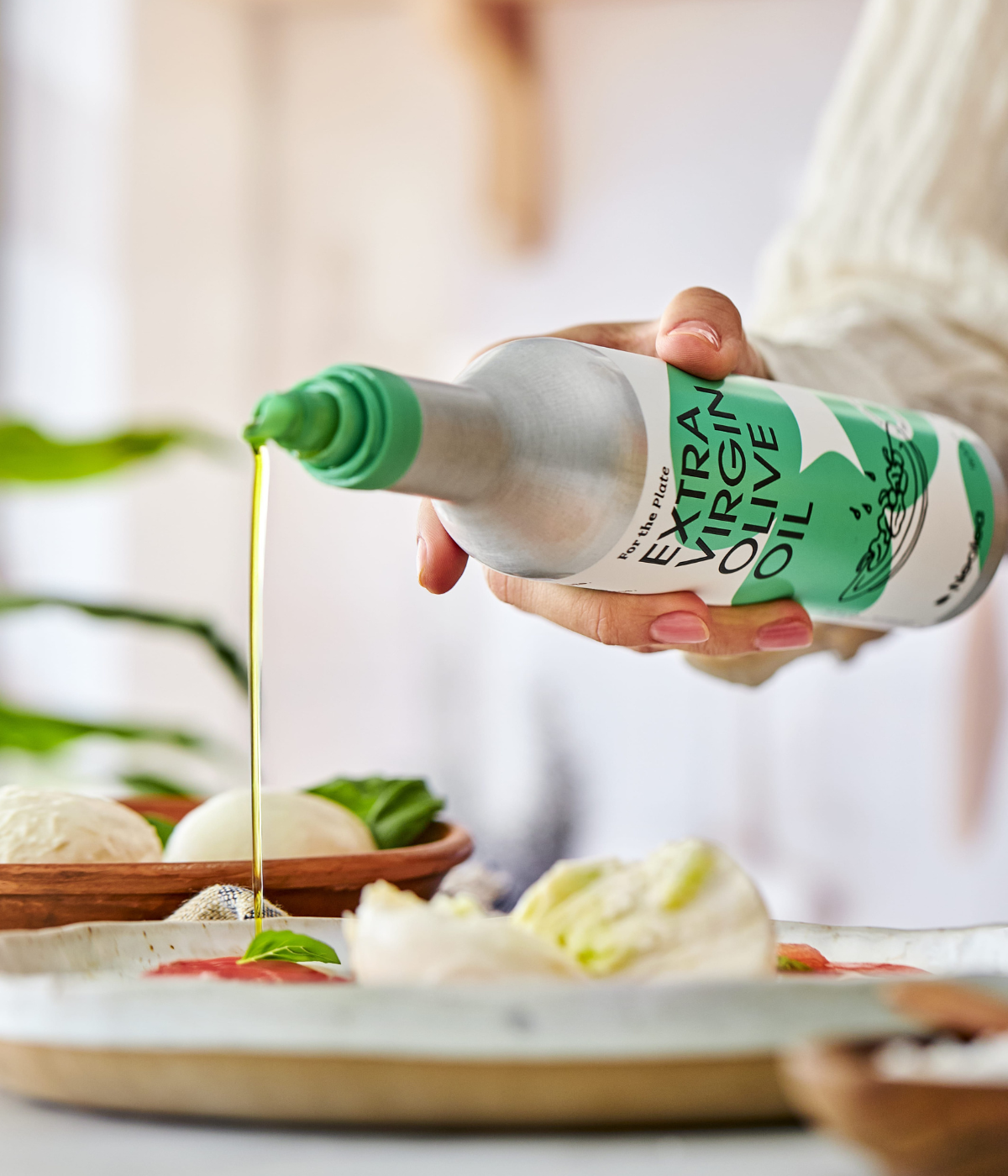
Extra virgin olive oil is one of the simplest ingredients in the kitchen, but also one of the most delicate.
It starts as fresh fruit. And like anything fresh, it changes over time. Light, oxygen and heat can affect its flavor, aroma and quality. That is why, at Neolea, we believe the bottle should do more than look good on a counter. It should protect what is inside.
In recent years, plastic squeeze bottles have become a familiar sight in modern kitchens. We understand the appeal: they are light, easy to use and convenient when you are cooking quickly. But for true extra virgin olive oil, convenience should never come at the cost of quality.
Extra virgin olive oil needs protection
A good extra virgin olive oil is full of character: grassy, fruity, peppery, sometimes bold, sometimes mild. Those fresh flavors come from careful harvesting, cold pressing and proper storage.
But once olive oil is exposed to too much light, oxygen or heat, it starts to lose what makes it special. The taste becomes flatter, the aroma fades and the oil can oxidize more quickly. That is why olive oil is best kept in packaging that protects it from light and air as much as possible.
Plastic simply does not offer the same level of protection as opaque or coated packaging. Especially when olive oil is stored in clear or semi-clear plastic, light exposure becomes a real concern.
Olive oil and plastic are not a natural match
There is another reason we choose not to bottle Neolea extra virgin olive oil in plastic: olive oil is a fatty, delicate food, and fatty foods interact with packaging differently than water-based products do.
Over time, and especially when exposed to heat or long storage conditions, certain compounds from plastic packaging can migrate into food. This does not mean every plastic bottle is automatically unsafe, food-grade plastics are regulated. But for a premium extra virgin olive oil, “good enough” is not the standard we want to design around.
Olive oil is often stored for months, shipped through different temperatures and used both for cooking and finishing. That makes protection, stability and material choice essential. For us, the packaging should stay in the background: protecting the oil without becoming part of the story.
Why we chose aluminum for Pan & Plate
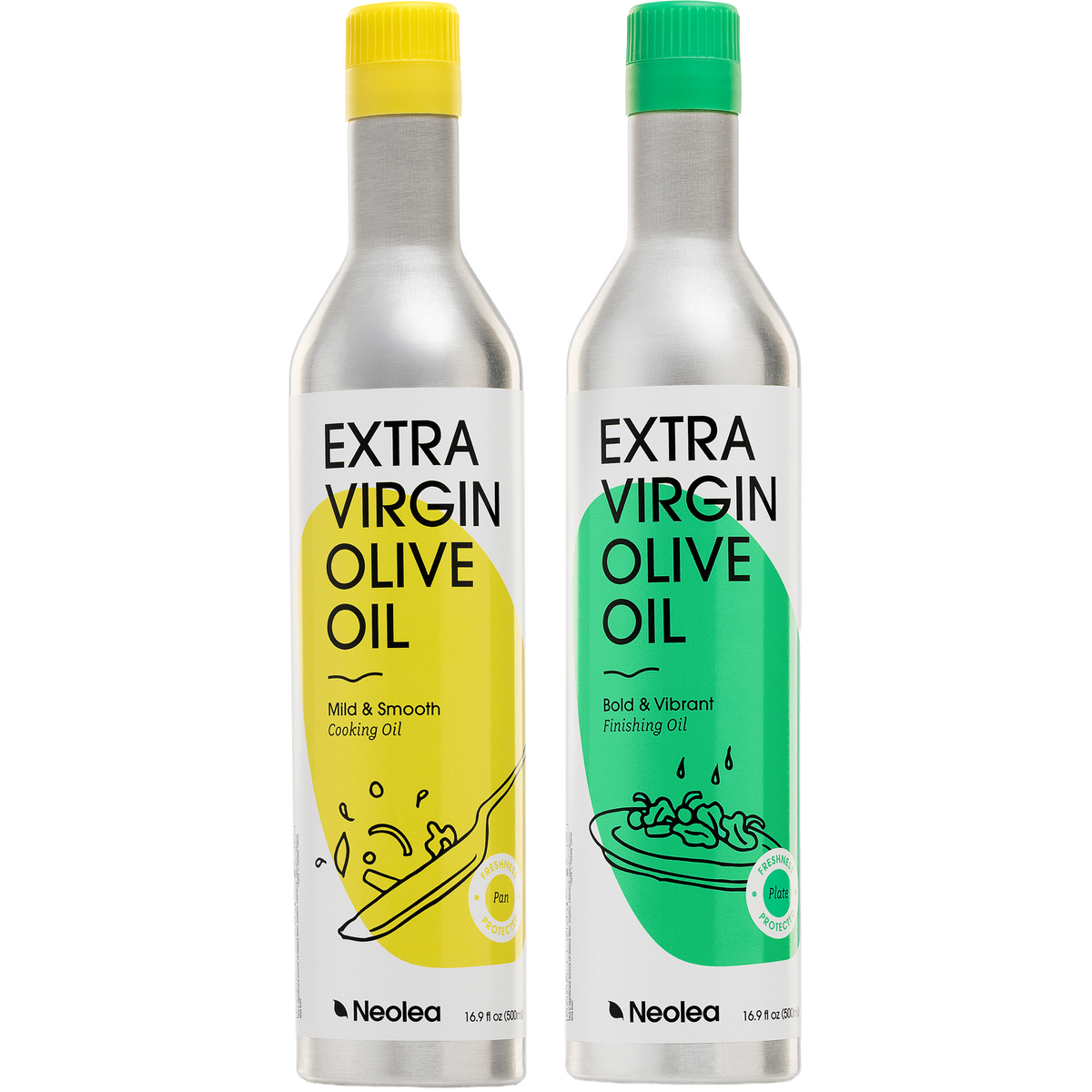
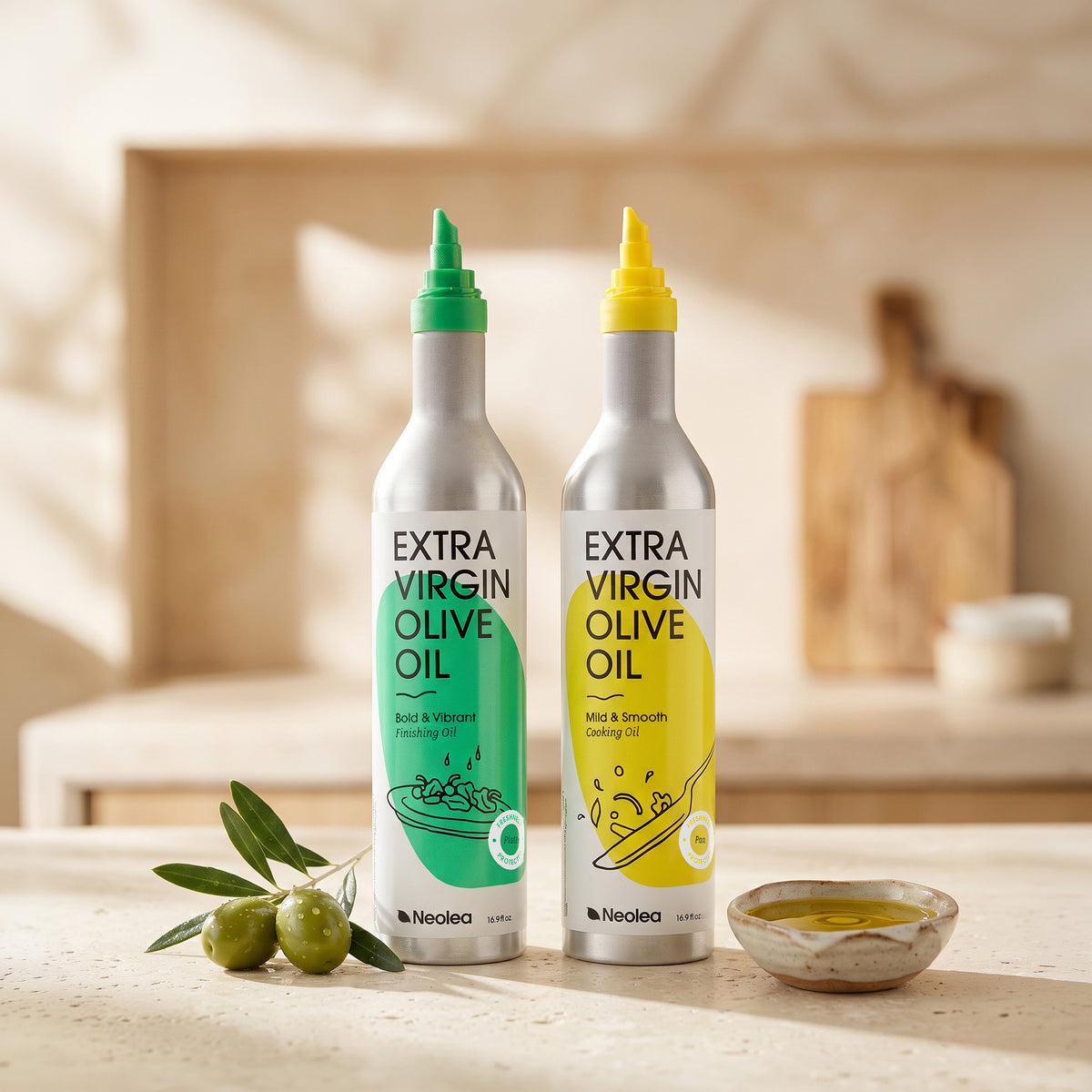
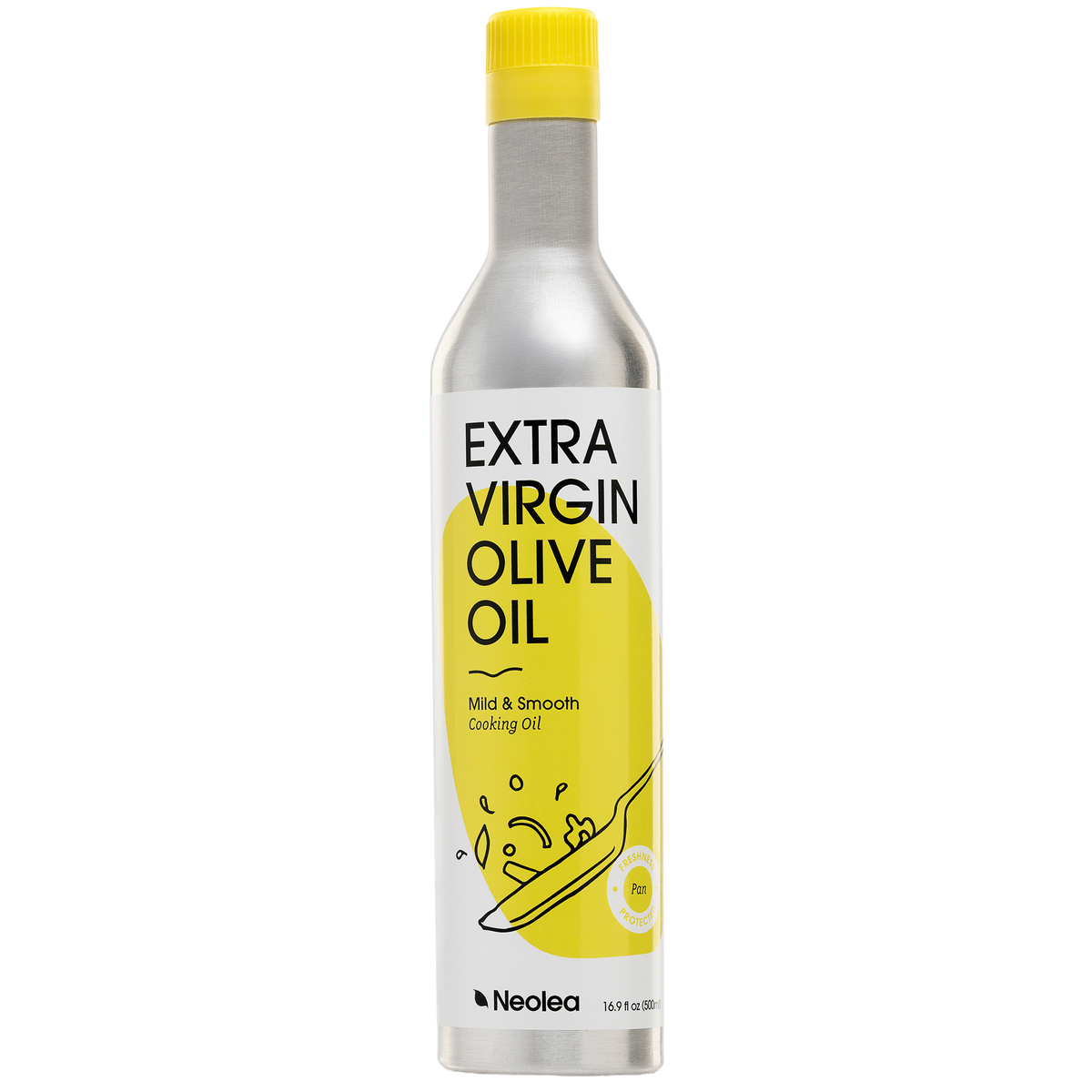
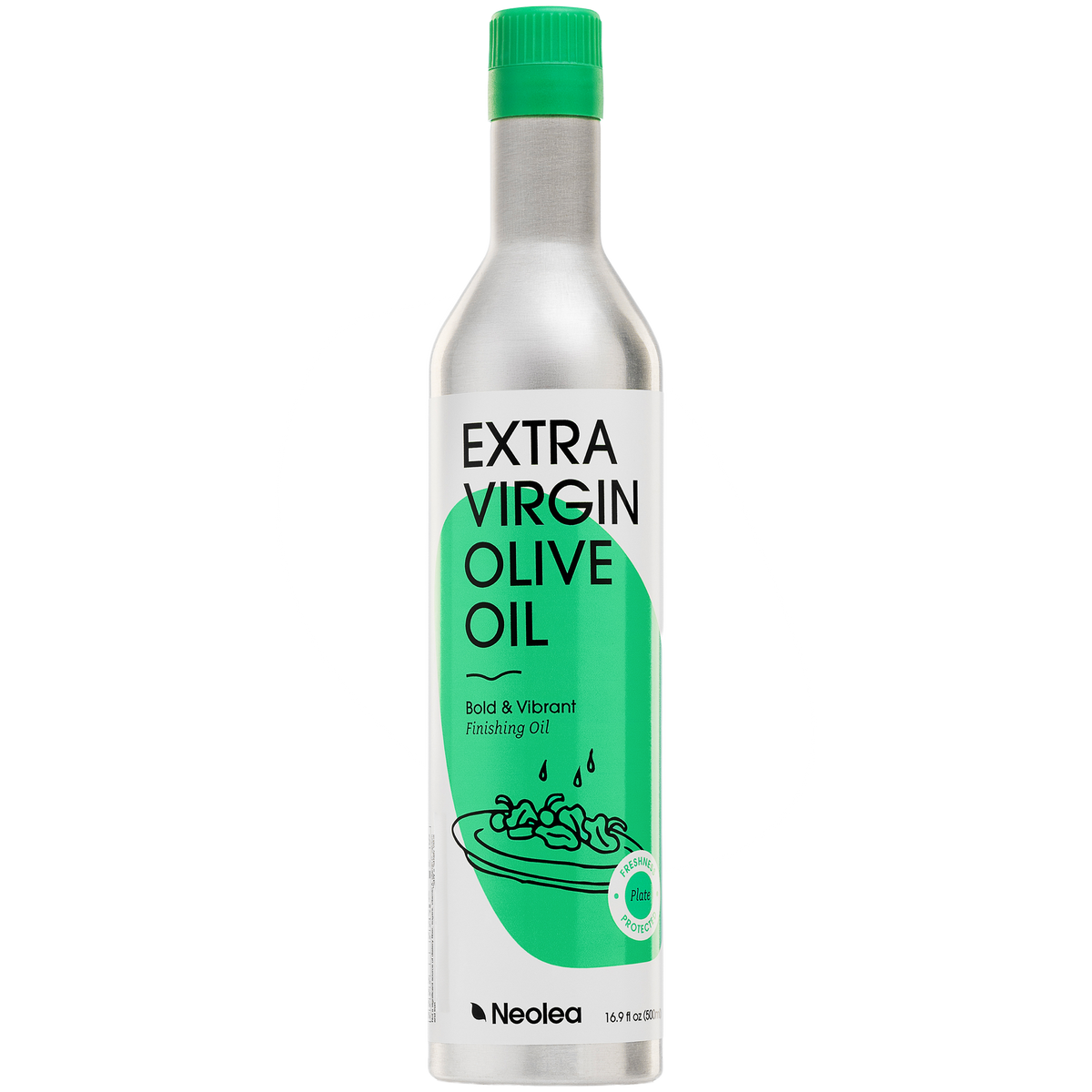
With Pan & Plate, we moved our extra virgin olive oil into infinitely recyclable aluminum bottles.
Aluminum is lightweight, practical and opaque. It helps shield the oil from light, reduces transport weight and fits the way we cook today: one bottle for heat, one bottle for finishing.
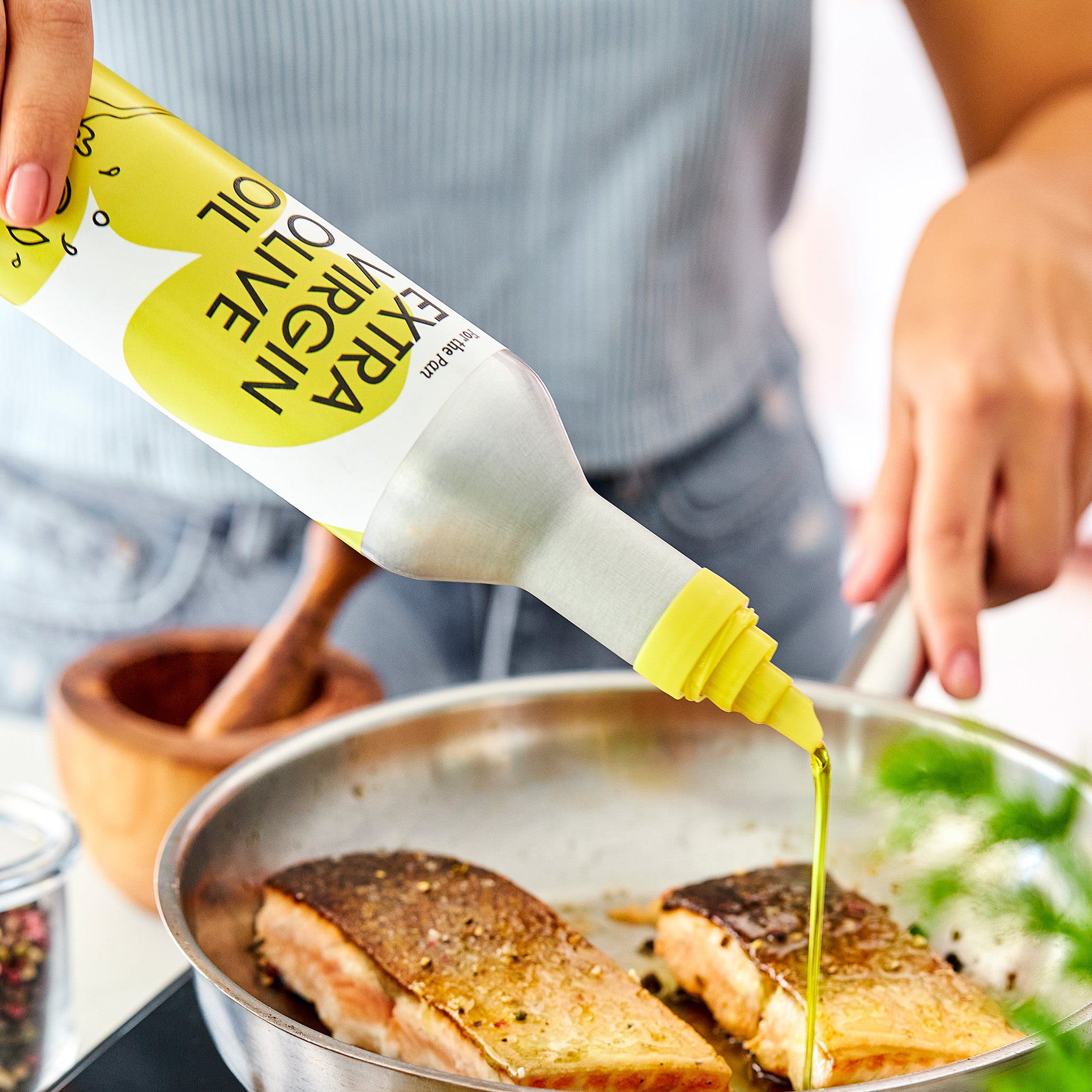
For the Pan is our mild and smooth cooking oil, made for everyday roasting, sautéing and baking.
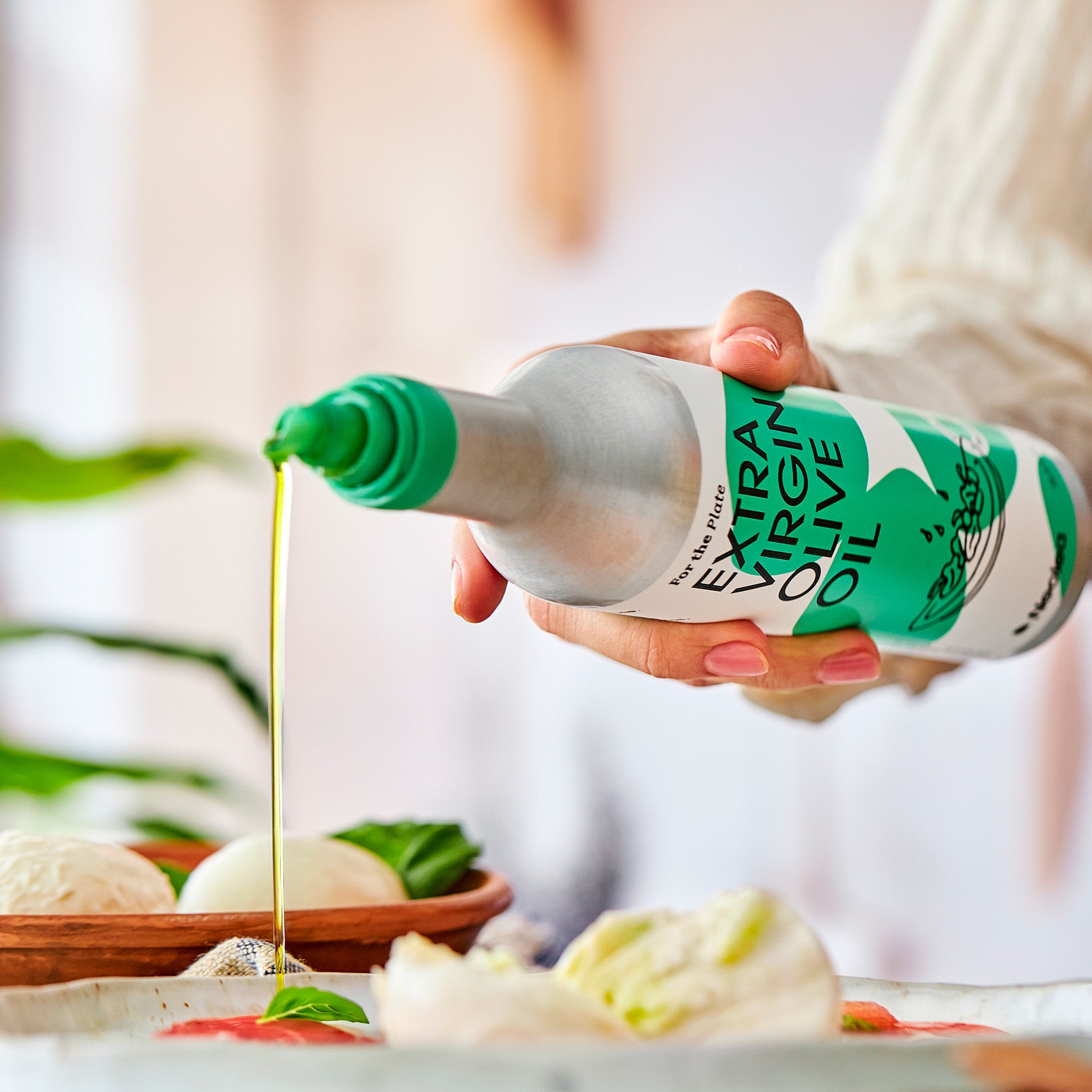
For the Plate is our bold and vibrant finishing oil, made for salads, vegetables, pasta, bread and that final drizzle at the table.
Both are single origin, cold pressed and made from 100% Greek Koroneiki olives. The difference is in how you use them. The promise is the same: honest extra virgin olive oil, made to bring people back to the table.


Leave a comment
This site is protected by hCaptcha and the hCaptcha Privacy Policy and Terms of Service apply.