
From Grove to Bottle: How Neolea Extra Virgin Olive Oil Is Made
The quality of extra virgin olive oil is determined by a series of precise decisions — in the grove, at the mill, and during storage. At Neolea, every step is designed to protect freshness, stability, and balance.

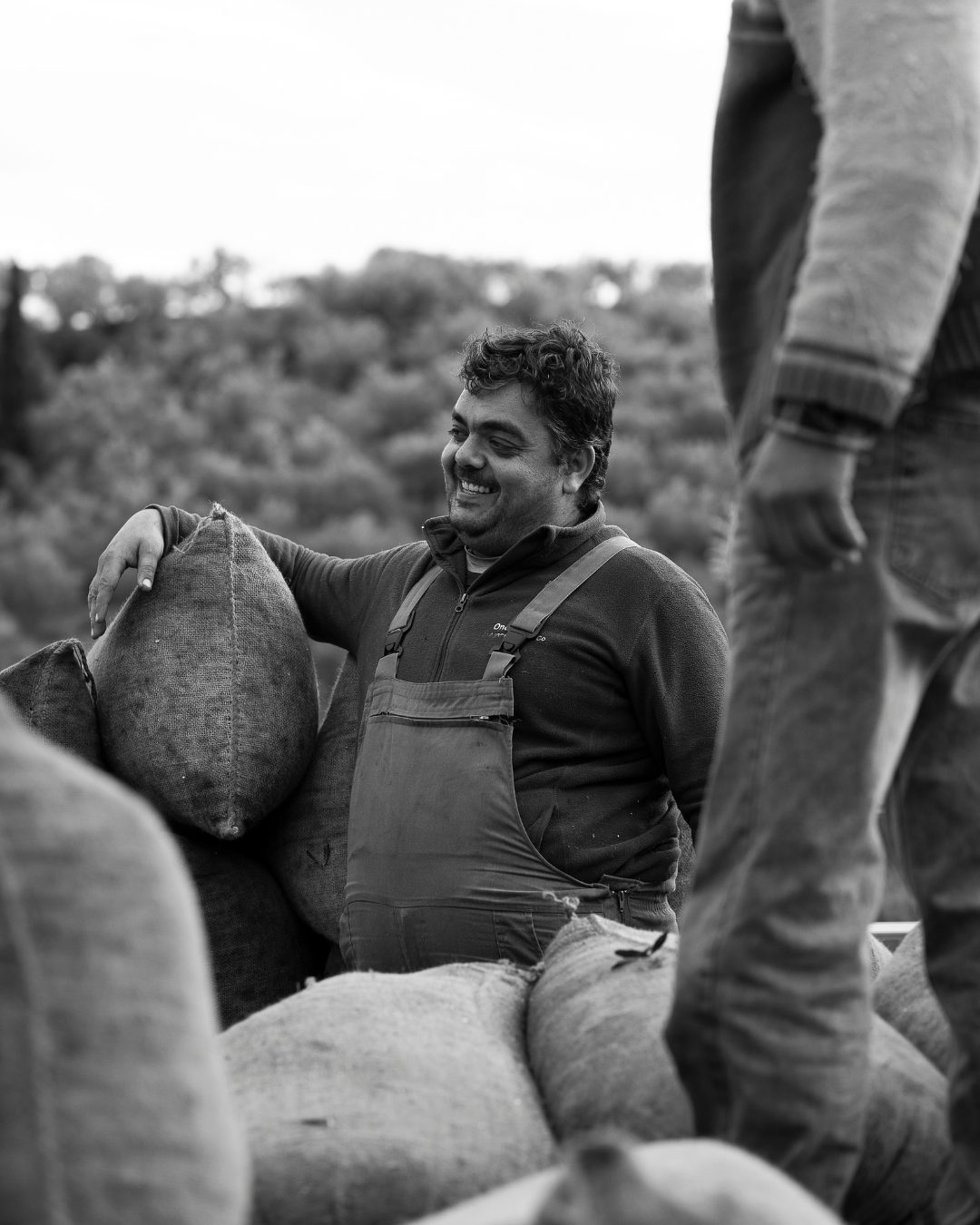
Harvest: timing guided by nature
Our olives are harvested in late autumn (October–November) and mid-winter (January-February). Early harvest is when the fruit transitions from green to slightly purple. Harvest timing is never based on the calendar alone. Temperature, rainfall, seasonal pressures such as olive fruit fly activity, and daily weather conditions all influence the picking decision.
Harvesting on the greener side preserves higher levels of phenolic compounds — natural antioxidants that contribute to structure, gentle bitterness, and the characteristic peppery finish of high-quality EVOO. Harvesting later still allows for extra virgin quality extraction but typically has a less strong flavor and aromas.
Variety: Koroneiki from the Peloponnese
We work with Koroneiki olives grown in the southern Peloponnese. This small, aromatic variety is known for its intensity, balance, and natural stability. When harvested early to mid-ripeness, it produces a golden-green oil with freshness and clarity.
Speed to mill: minimizing oxidation
Olives are transported to the mill shortly after harvest. Oxidation begins as soon as olives leave the tree, so minimizing time before crushing is essential to preserving aroma and preventing early degradation.
Extraction: controlled and mechanical
At the mill, olives are washed and crushed into a paste. The paste undergoes gentle malaxation, where it is slowly mixed to allow oil droplets to combine. Temperature is kept below 27°C — commonly referred to as cold extraction — to protect aromatic compounds and phenolic integrity.
Modern centrifugation separates the oil from water and solids. No solvents or chemicals are used. Extraction is entirely mechanical.
Selection and blending
The mill processes olives from multiple family-owned groves. Each lot of oil is kept separate and evaluated individually through laboratory analysis and sensory tasting.
Approved oils are stored in stainless steel tanks with conical bases, allowing any remaining sediment to settle naturally.
Rather than relying on a single batch, we select and blend oils based on harvest timing and sensory profile:
- Early-harvest oils provide vibrancy, structure, and a pronounced peppery finish.
- Later-harvest oils offer roundness and softer aromatic expression.
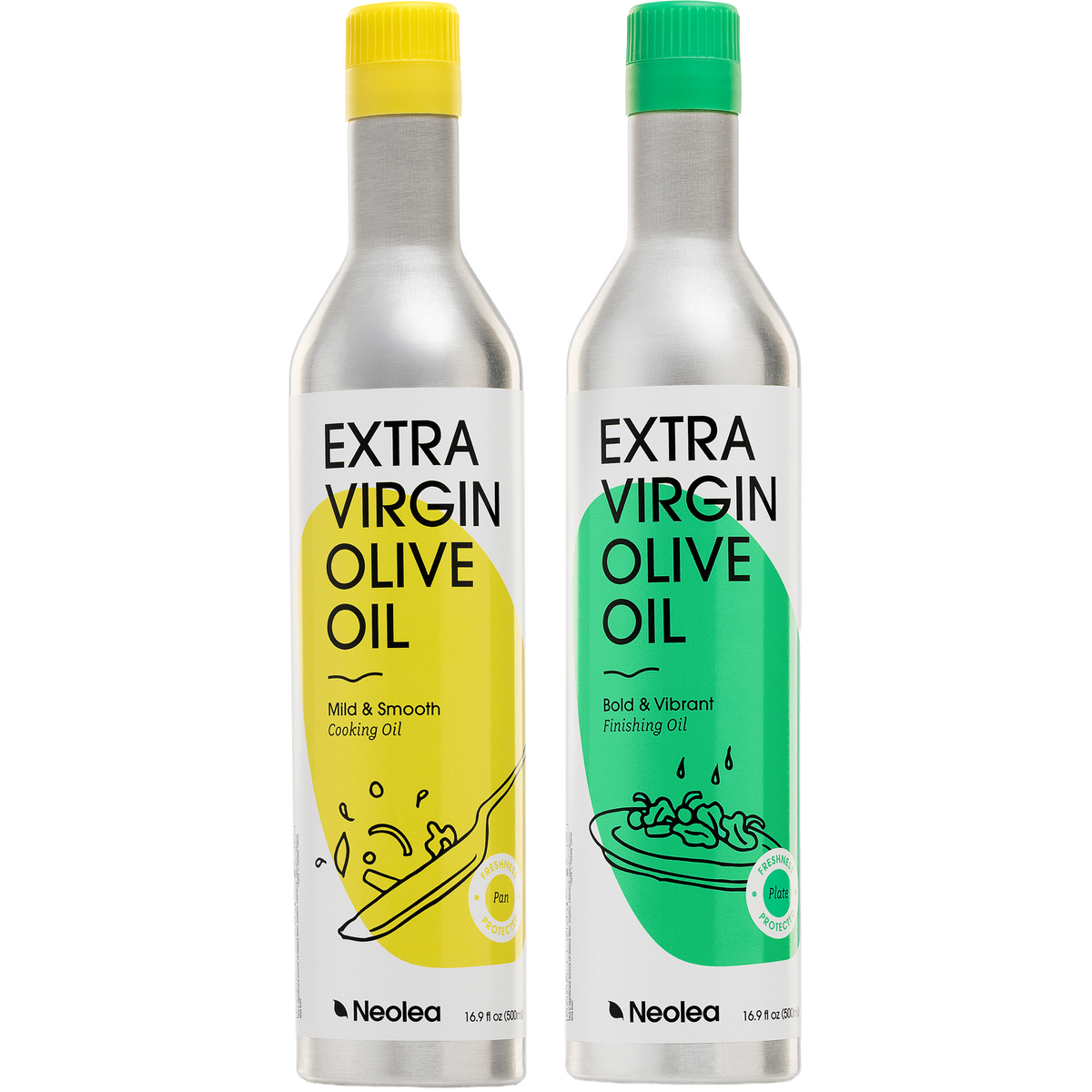
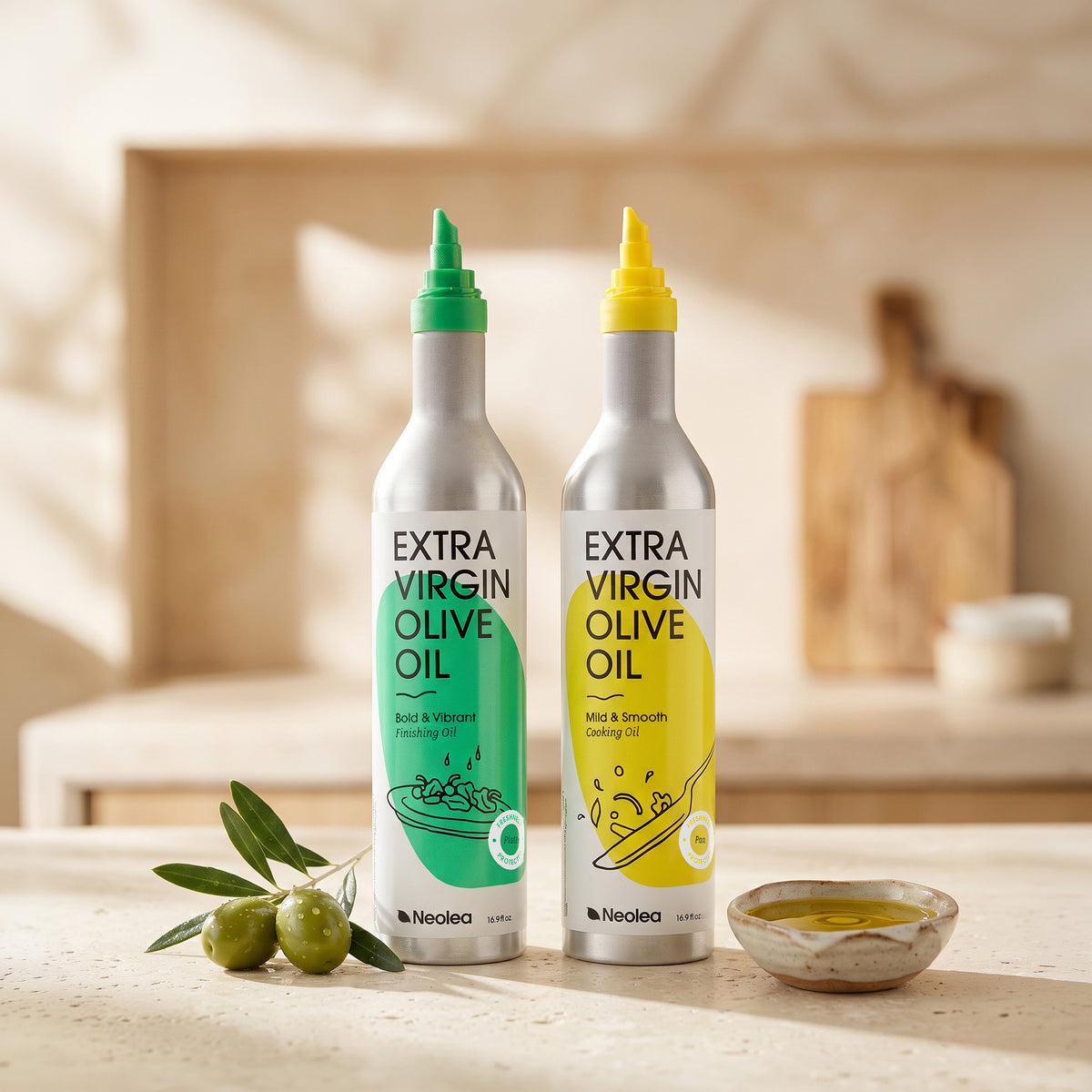
This separation allows us to create distinct blends:
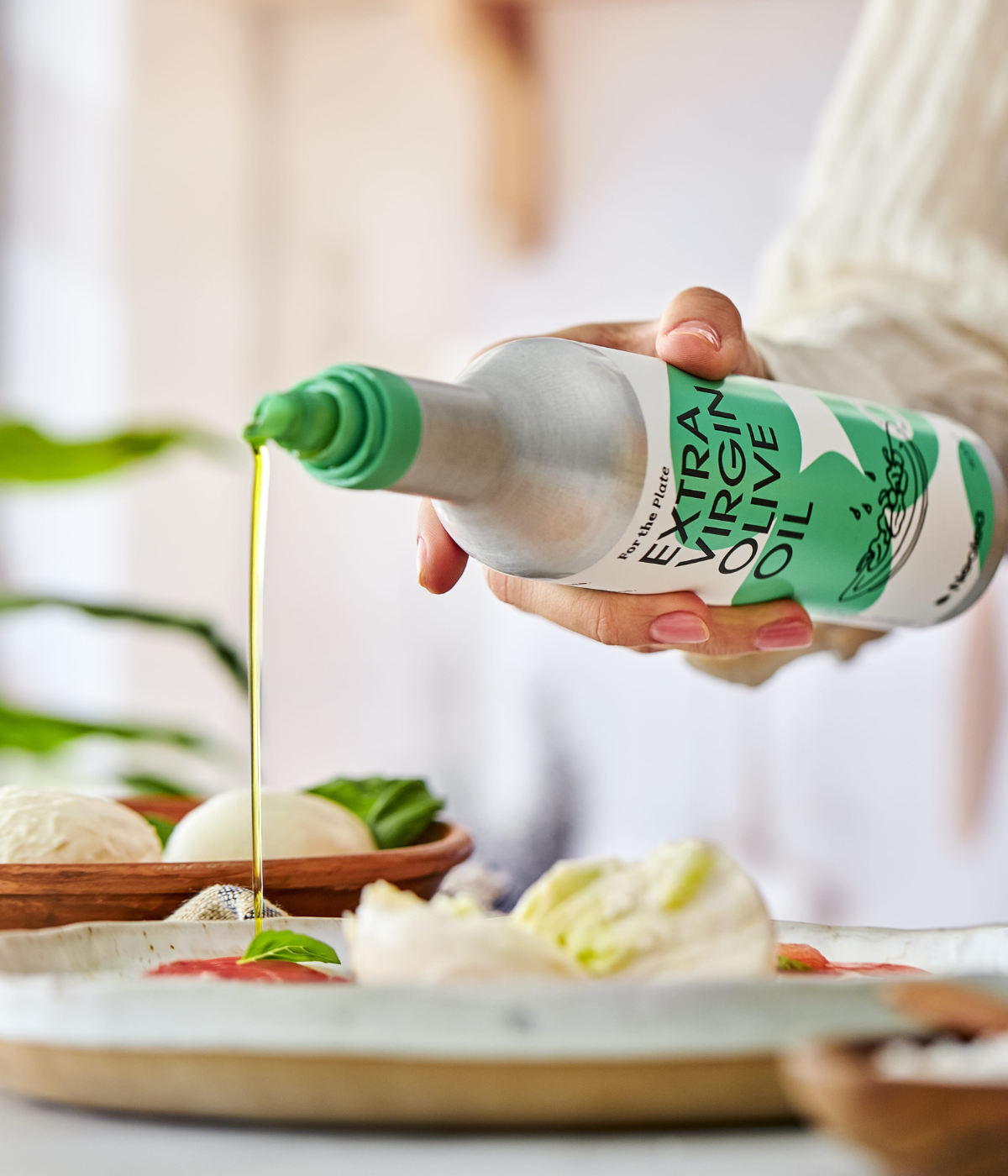
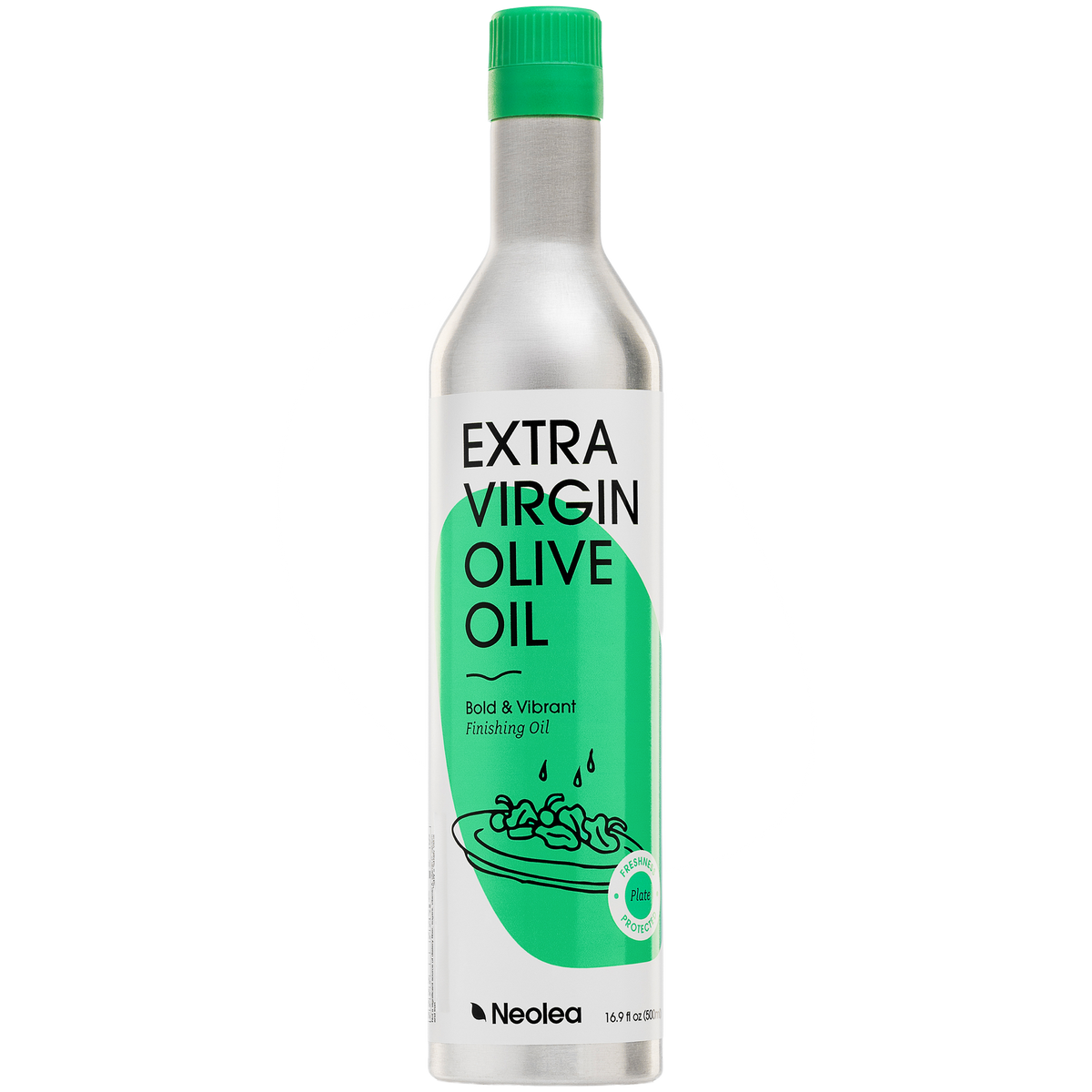
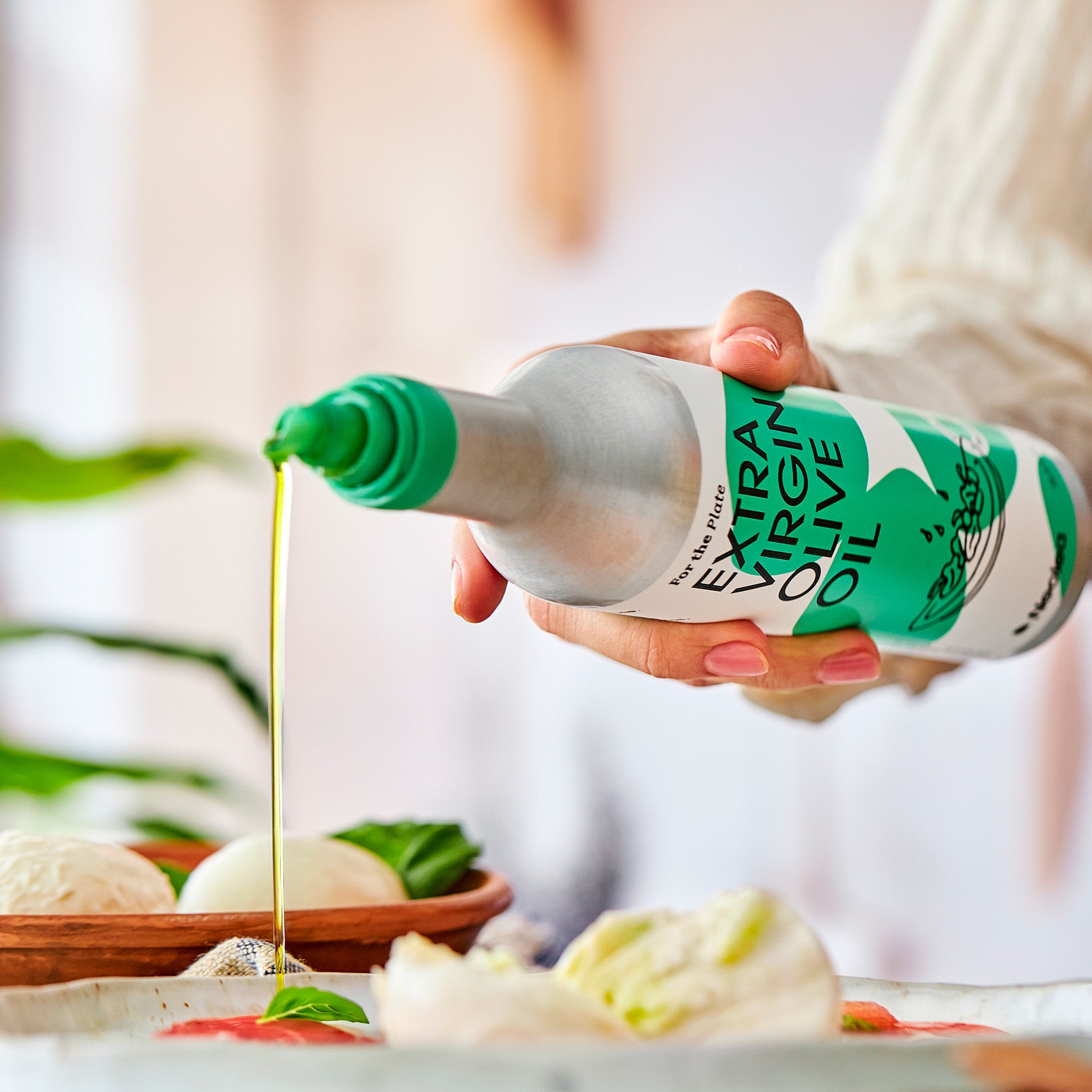
- For The Plate — Brighter, grassy and more structured, ideal for finishing.
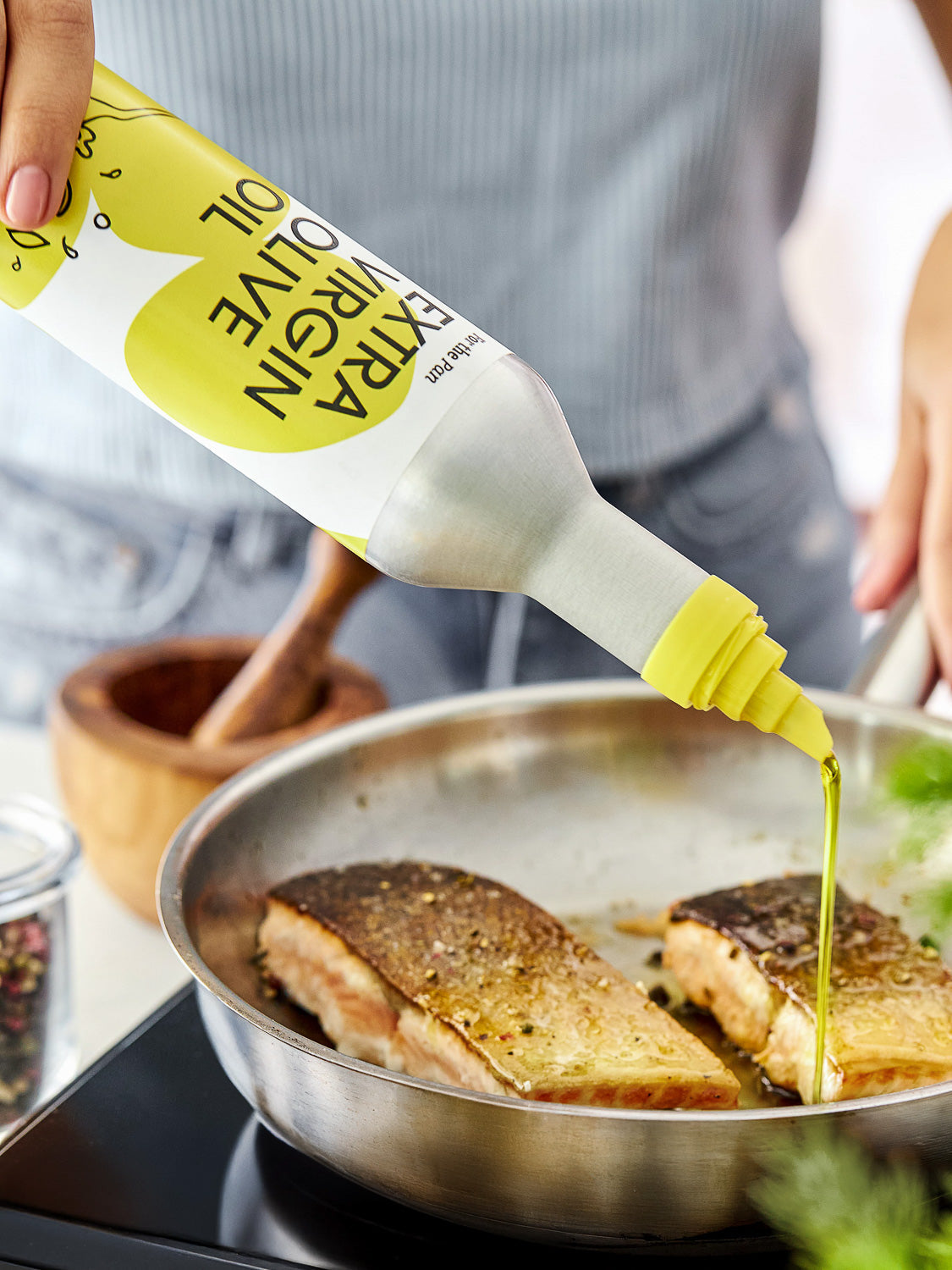
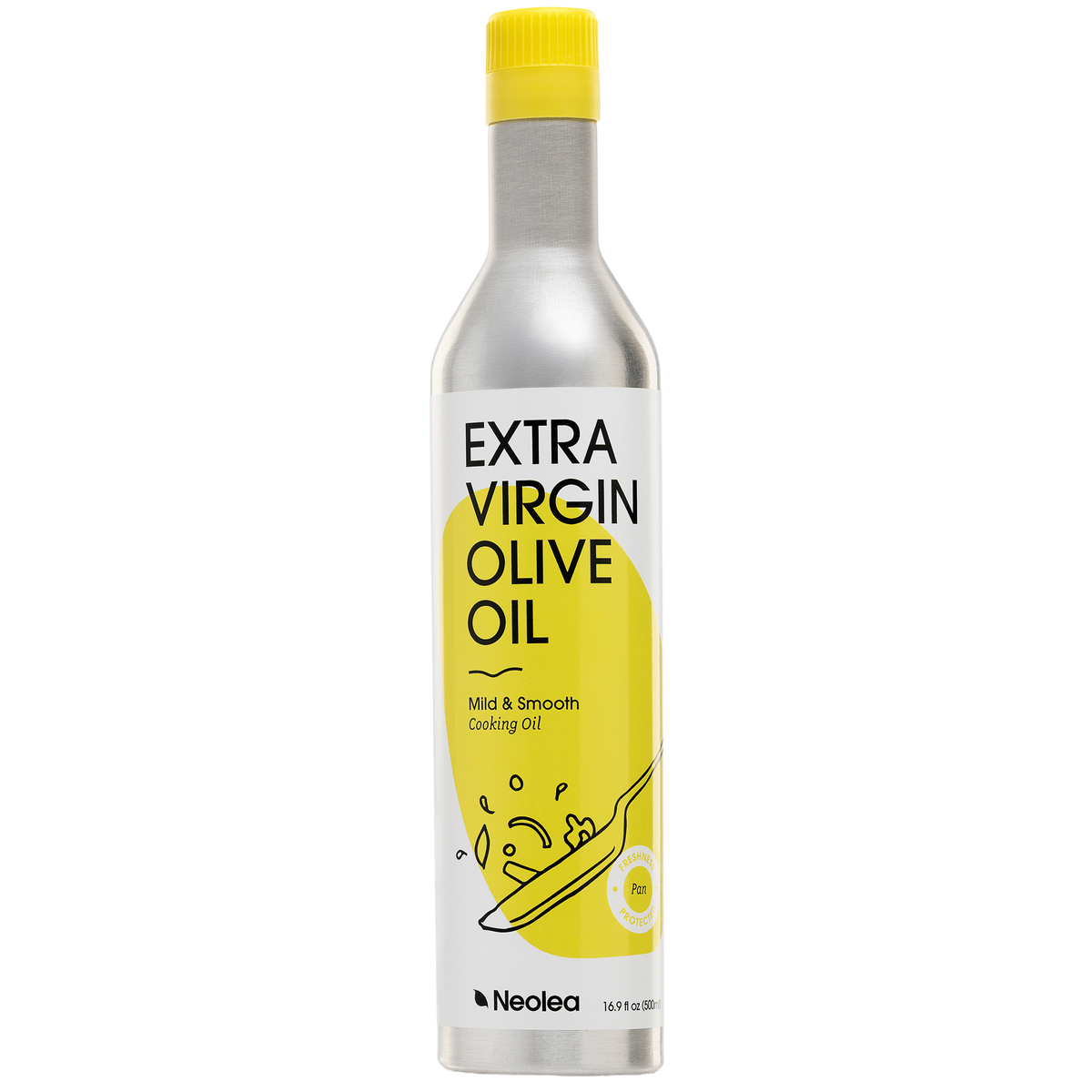
- For The Pan — Clean, milde and smooth, suited for everyday cooking.
Final blends are crafted only after tasting and analytical approval to ensure consistency and balance.
Filtration: protecting stability
Fresh olive oil naturally contains fine olive particles from the milling process. If left in the oil, these particles can ferment over time and shorten shelf life.
We filter our oil through paper filters to remove these fine solids. This improves clarity and helps preserve stability without altering the oil’s natural character.
Storage and bottling
After blending and filtration, the oil is stored in temperature-controlled stainless steel tanks, protected from light and oxygen.

We bottle in UV-resistant containers to shield against light exposure. Each batch is marked with a best-before date linked to harvest year for transparency. For optimal vibrancy, extra virgin olive oil is best enjoyed within 12 months of harvest.
From careful harvest timing to controlled extraction, thoughtful blending, and protective storage, every stage is designed to deliver a fresh, balanced, and reliable extra virgin olive oil — crafted with precision and clarity.



Leave a comment
This site is protected by hCaptcha and the hCaptcha Privacy Policy and Terms of Service apply.